OSHA & Safety Compliance Auditing in Irving, TX
Ensuring projects meet strict safety standards.
Technical
Specifications.
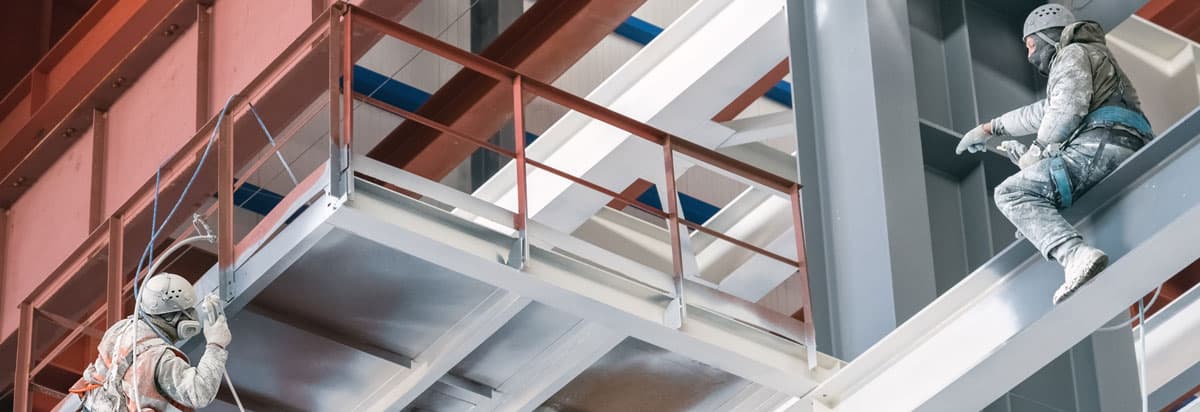
Commercial Painting Contractors Irving provides independent OSHA and safety compliance auditing services for property owners, general contractors, and facility managers requiring verification of painting contractor safety protocols, regulatory compliance, and risk management procedures on commercial and industrial projects throughout Irving and the Dallas-Fort Worth area. Our safety auditors deliver systematic evaluation of contractor safety programs, on-site safety practice verification, regulatory compliance assessment, and risk identification helping owners and managers ensure contractors maintain appropriate safety standards protecting workers and limiting liability exposure. We understand that contractor safety affects property owner liability—OSHA holds property owners jointly responsible for contractor violations, creating significant financial and legal risk when contractors lack proper safety programs. Serving Irving's development community, corporate facilities contracting major projects, and property managers requiring contractor oversight, we provide independent safety verification protecting against preventable incidents and regulatory exposure.
Pre-qualification safety program review
On-site safety practice observation and verification
OSHA regulatory compliance assessment
Fall protection and PPE verification
Hazard communication program audit
Safety documentation and training record review
Incident investigation and root cause analysis
Corrective action recommendation and follow-up
Irving
Context.
Based in Irving, we serve the property owner and general contractor community throughout DFW requiring safety oversight on coating projects, corporate facilities departments managing contractor safety compliance, municipal departments ensuring contractor adherence to safety requirements, and institutional facilities with heightened safety standards. Our auditing addresses Irving-specific considerations including local OSHA enforcement patterns and jurisdiction-specific safety requirements.
Specify Your Project
Strategic
Advantages.
Reduced liability exposure through contractor safety compliance verification
Prevented costly incidents affecting project schedules and budgets
Protected worker safety ensuring proper protocols and equipment
Supported regulatory compliance avoiding OSHA citations and penalties
Enhanced contractor accountability through independent oversight
Documented due diligence demonstrating reasonable care in contractor selection
Improved project outcomes through proactive risk identification and mitigation
Our Proven
Process.
Contractor safety program documentation review pre-project
Site safety audit observing actual practices and conditions
Regulatory compliance verification against OSHA and industry standards
Hazard identification and risk assessment
Detailed audit report documenting findings and non-compliance
Corrective action recommendations with priority ranking
Follow-up verification ensuring corrective actions implemented
Frequently Asked
Questions.
Why do property owners need independent safety audits of contractors?
Property owners face significant liability when contractor violations occur on their property—OSHA can cite property owners under multi-employer doctrine. Serious incidents create workers' compensation claims, potential lawsuits, regulatory penalties, project delays, and reputation damage. Independent audits verify contractors maintain claimed safety programs, identify hazards before incidents occur, document owner due diligence demonstrating reasonable care, and ensure contractors comply with contractually required safety standards. Audit costs are minimal versus incident exposure—prudent risk management.
What safety violations are most common on painting projects?
Common issues include inadequate fall protection on scaffolds, ladders, or elevated platforms, lack of proper PPE including respirators for spray painting, improper ladder use and unstable setups, inadequate hazard communication regarding coating materials, confined space entry without proper protocols, electrical hazards from equipment and temporary lighting, inadequate guardrails and barricades, and missing safety training documentation. We identify these common violations plus project-specific hazards during systematic audits enabling corrective action before regulatory inspection or incidents occur.
Can you audit contractor safety before project award?
Absolutely. Pre-qualification safety audits evaluate contractor safety programs, review OSHA 300 logs identifying incident history, verify insurance and workers' compensation coverage, assess safety training programs and documentation, review written safety plans and procedures, and interview safety personnel evaluating competence. Pre-bid safety qualification prevents unqualified contractors from project consideration—eliminating safety-deficient firms before contract award rather than discovering problems mid-project. Many sophisticated owners require pre-qualification preventing lowest-bidder safety disasters.
What happens when audits identify safety violations?
Audit reports document specific violations with regulatory citations, photographic evidence when appropriate, and corrective action recommendations. Severity ranking prioritizes imminent dangers requiring immediate correction versus less critical administrative issues. Property owners or GCs use reports requiring contractor corrective action, withholding payment until compliance achieved, or terminating contracts for serious repeated violations. Our role is objective documentation—enforcement decisions rest with property owners. Most contractors appreciate identification enabling correction before OSHA inspection or incidents.
Do you provide ongoing monitoring throughout project duration?
Yes, periodic audits throughout project duration verify sustained compliance versus one-time inspection compliance. Weekly or bi-weekly site audits identify emerging hazards, verify corrective actions from previous audits, assess changing conditions as work evolves, and document ongoing safety performance. Continuous oversight maintains contractor accountability and provides early warning of deteriorating safety culture. For large or high-risk projects, ongoing monitoring provides essential safety management supporting successful incident-free project completion.
Project Lifecycle
Typical deployment timeline for Irving facilities.
Evaluation
Day 1-2Substrate analysis and detailed specification development.
Mobilization
Day 3-5Site protection, equipment setup, and material procurement.
Execution
VariesMulti-layered coating application with phased deployment.
Validation
Final DayQuality audit, walk-through, and site demobilization.
Evaluate
Your Asset.
Whether you possess a single corporate unit or an entire industrial complex, our professional team is prepared to develop your project specifications.