Cooling Tower & Mechanical Painting in Irving, TX
Protective finishes for HVAC and utility equipment.
Technical
Specifications.
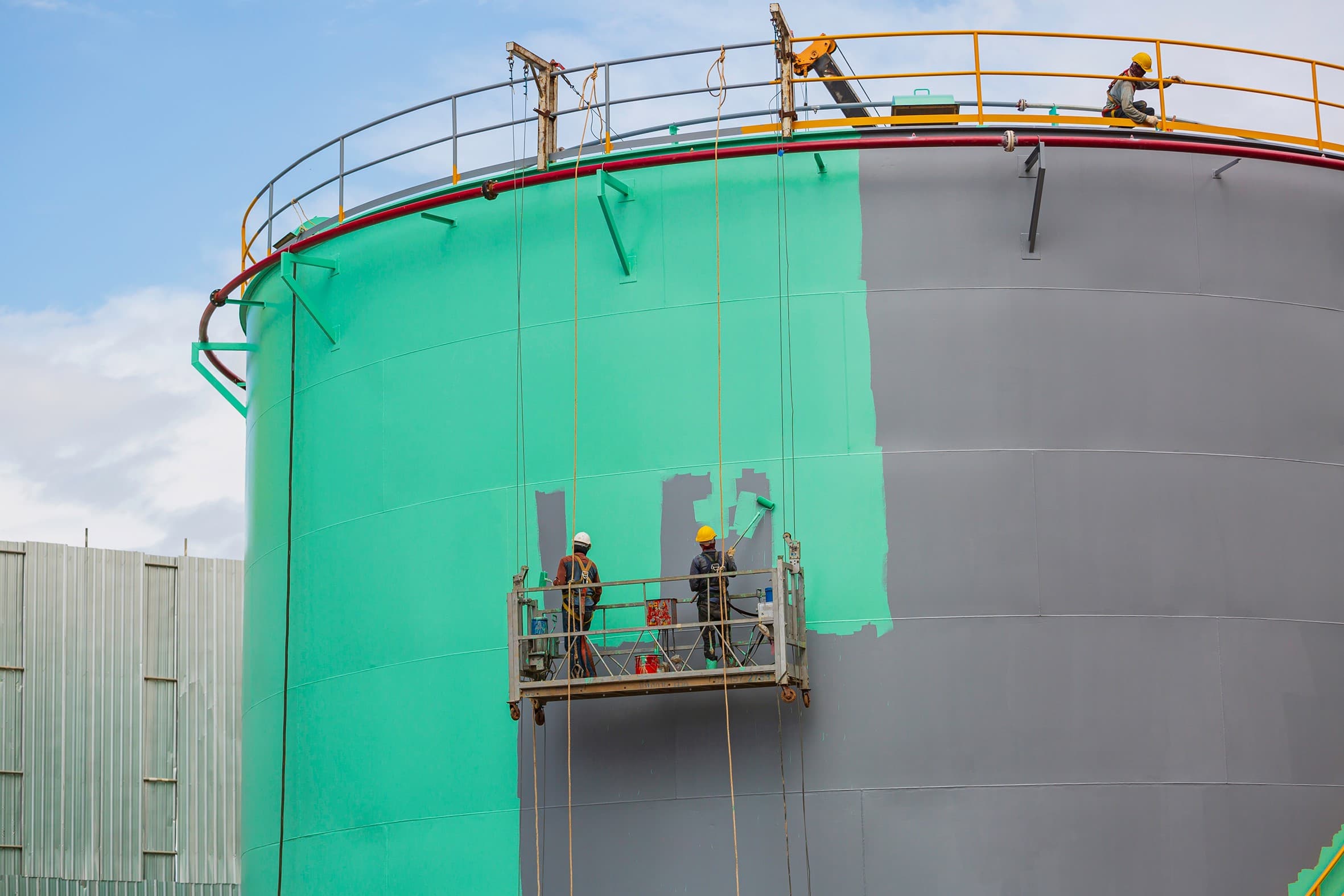
Commercial Painting Contractors Irving provides specialized cooling tower and mechanical equipment painting services protecting critical HVAC infrastructure, chiller plants, boiler systems, and rooftop mechanical equipment throughout Irving's commercial and industrial facilities. Our mechanical coating specialists understand the harsh service environments mechanical equipment faces—constant moisture exposure, chemical treatment additives, thermal cycling, UV degradation, and corrosive atmospheres that rapidly deteriorate unprotected metal surfaces. We deliver comprehensive protective coating systems for cooling tower structures, basins, and components, exterior chiller and boiler equipment, rooftop HVAC units, process piping and mechanical systems, and utility infrastructure requiring corrosion protection. Serving Irving's office buildings, industrial facilities, healthcare centers, and data centers relying on mechanical systems for operations, we provide protective coatings extending equipment lifespan, maintaining operational efficiency, and preventing costly premature failure from corrosion damage.
Cooling tower basin and structure coating systems
Moisture and chemical-resistant protective coatings
High-temperature coatings for hot equipment surfaces
Corrosion protection for exposed mechanical equipment
UV-resistant topcoats for outdoor installations
Safety marking and identification color coding
Minimal disruption to mechanical operations
Coordination with mechanical contractors and engineers
Irving
Context.
Based in Irving, we serve the mechanical infrastructure throughout Las Colinas office towers, industrial facilities along the Interstate 635 corridor, data centers requiring critical cooling equipment protection, healthcare facilities with extensive HVAC systems, and retail developments with rooftop mechanical installations. Our crews coordinate with mechanical contractors and facility engineers understanding the operational criticality of HVAC systems and implementing coating schedules minimizing impact to building conditioning and process cooling operations.
Specify Your Project
Strategic
Advantages.
Extended equipment lifespan through corrosion prevention on metal components
Maintained cooling efficiency preventing scale buildup and corrosion restriction
Reduced maintenance costs avoiding premature equipment replacement
Enhanced safety through proper protective coating of chemical-exposed surfaces
Improved aesthetic appearance of visible rooftop mechanical equipment
Compliance with environmental regulations and water treatment protocols
Protected critical operations maintaining facility conditioning and process cooling
Our Proven
Process.
Mechanical equipment assessment and coating system specification with engineers
Scheduling coordination minimizing impact to building cooling or process operations
Comprehensive cleaning removing scale, biological growth, and contaminants
Rust removal and surface preparation appropriate to coating system requirements
Application of moisture and chemical-resistant primer systems
Topcoat application providing UV and environmental protection
Quality verification and coordination with mechanical contractor for return to service
Frequently Asked
Questions.
Can cooling towers be coated while in operation?
Typically no—coating requires tower shutdown, drainage, and cleaning for proper application. We coordinate with facility engineers scheduling work during shoulder seasons (spring/fall) when cooling loads are lower, or coordinate with planned maintenance shutdowns. For facilities with multiple cells or towers, phased coating maintains partial cooling capacity. Emergency chillers can sometimes support operations during short coating projects. We work with engineering teams developing strategies minimizing operational impact.
What causes corrosion in cooling towers and mechanical equipment?
Multiple factors accelerate corrosion including constant moisture exposure creating ideal corrosion conditions, chemical treatment additives (chlorine, biocides) causing chemical corrosion, biological growth producing corrosive byproducts, thermal cycling stressing protective coatings, UV exposure degrading exterior equipment coatings, and dissimilar metal contact causing galvanic corrosion. Proper coating systems address these mechanisms through moisture barriers, chemical resistance, UV stability, and sacrificial or barrier corrosion protection depending on equipment and service conditions.
What coating systems work best for cooling tower basins?
Cooling tower basins face extreme service conditions requiring specialized systems. Common options include epoxy coatings providing excellent chemical and moisture resistance, polyurethane systems offering superior abrasion resistance and flexibility, and vinyl ester for severe chemical exposure. Systems must resist continuous water immersion, chemical treatment additives, temperature fluctuations, and biological growth. We recommend proven systems from manufacturers like Sherwin-Williams, Tnemec, or Carboline with documented performance in cooling tower service.
Can you coat boilers and high-temperature equipment?
Yes, using appropriate high-temperature resistant coatings. Equipment surface temperatures determine product selection—standard coatings to 200°F, silicone alkyd or ceramic coatings to 500-600°F, and specialized high-temp systems to 1200°F for exhaust stacks or extreme applications. Proper surface preparation including removing scale and oxidation is critical. High-temp coatings prevent corrosion on equipment surfaces too hot for conventional systems, extending equipment life and maintaining operational efficiency.
Do you provide pipe identification painting and safety marking?
Absolutely. Mechanical and process pipe marking is critical for safety and operational efficiency. We provide ANSI/ASME compliant pipe color coding identifying content (water, steam, gas, chemicals, etc.), direction-of-flow arrows, pressure and temperature labeling, and hazard identification markings. Equipment safety marking includes high-voltage warnings, hot surface indicators, and operational safety notices. Proper identification prevents accidents, supports maintenance efficiency, and ensures regulatory compliance throughout mechanical spaces.
How do you protect coating integrity during mechanical equipment cleaning?
Coating selection considers maintenance cleaning requirements. For cooling towers requiring periodic acid cleaning or biocide treatment, we specify chemical-resistant systems withstanding cleaning regimens. For equipment requiring pressure washing, we use coatings with superior adhesion and moisture resistance. We provide maintenance guidelines to facility teams specifying compatible cleaning products, pressures, and methods preventing coating damage. Proper coating selection and maintenance coordination delivers maximum system lifespan despite aggressive cleaning protocols.
Can existing deteriorated mechanical equipment be restored through coating?
Often yes, to a point. Surface rust and coating failures are readily addressed through rust removal and recoating. However, severe corrosion with metal loss, pitting, or structural degradation may require component replacement. We assess equipment condition honestly, recommending coating restoration when viable or replacement when corrosion has progressed beyond protective coating's capability. Many facilities benefit from coating restoration at 20-40% of replacement cost, extending service life 10-15+ years when substrate remains structurally sound.
Project Lifecycle
Typical deployment timeline for Irving facilities.
Evaluation
Day 1-2Substrate analysis and detailed specification development.
Mobilization
Day 3-5Site protection, equipment setup, and material procurement.
Execution
VariesMulti-layered coating application with phased deployment.
Validation
Final DayQuality audit, walk-through, and site demobilization.
Evaluate
Your Asset.
Whether you possess a single corporate unit or an entire industrial complex, our professional team is prepared to develop your project specifications.